Eye bags are one of the most common aesthetic concerns that can make you look exhausted and older, even after a full night’s sleep. While many people search for home remedies or expensive eye creams, the.

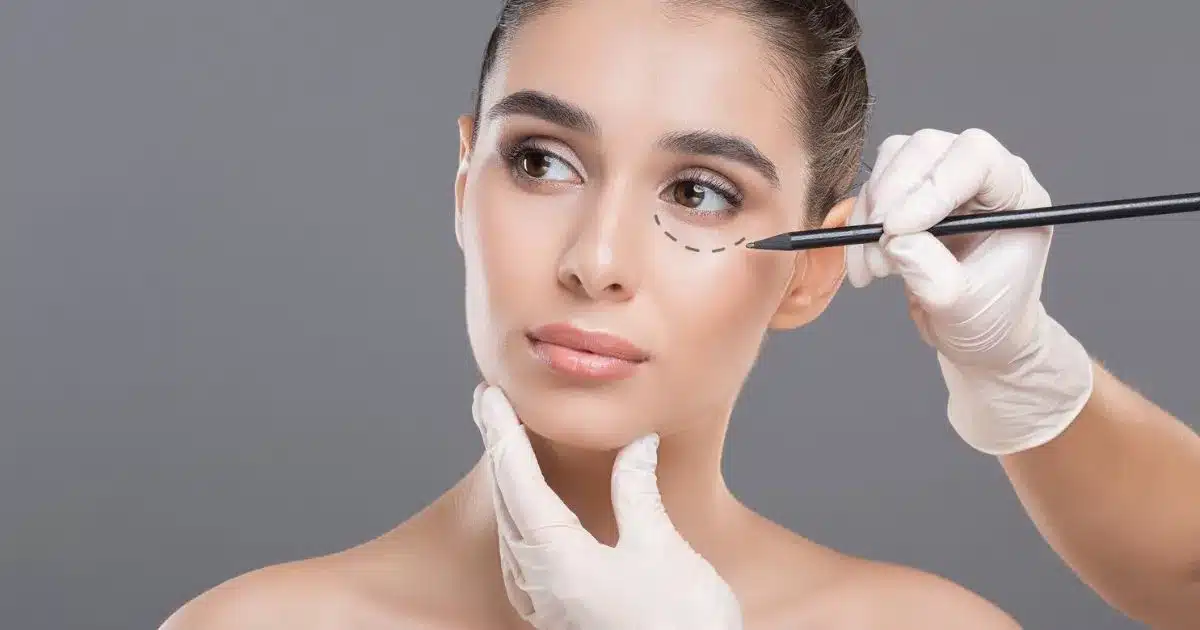
What Causes Eye Bags?
There are several reasons people get puffy eyes, including:
- High-salt diet: Eating a lot of salty foods causes you to retain water and leads to swelling.
- Allergies: Congestion and inflammation from allergies can sometimes exacerbate under-eye puffiness.
- Medical conditions: Some health conditions such as thyroid problems can cause the eyes to become swollen.
- Genetics: Having under-eye bags can be a physical characteristic that runs in your family.
- Natural aging process: Loss of firmness in the skin and muscles happens as you age.
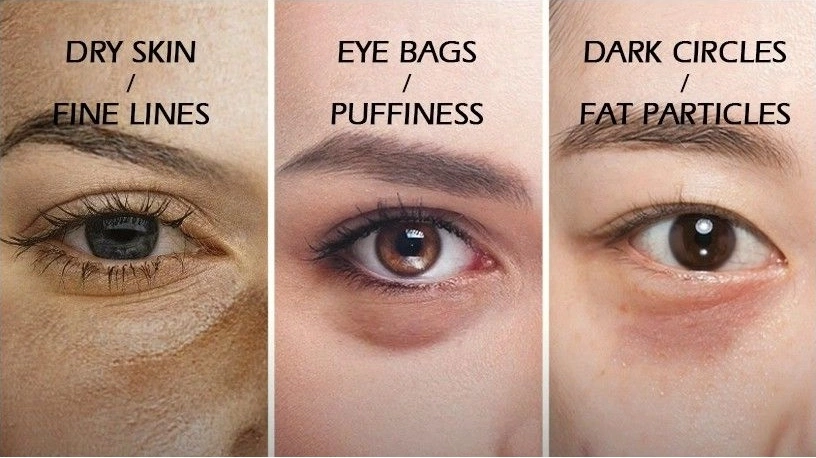
Why Under-Eye Bags Form When You Get Older?
You might notice that puffiness becomes permanent as you age. This is a natural part of the aging process. As we get older, the collagen network in our skin breaks down, and the tissues supporting your eyelids weaken.
When this support structure weakens, three specific changes occur that create the “baggy” look:
1. Protrusion of Orbital Fat Pads
The eye is naturally cushioned by fat pads held in place by a wall of tissue. As we age, this tissue wall weakens, causing the fat to slip forward and bulge out. This creates the classic “puffy” look. Because this is physical fat displacement, no amount of sleep or eye cream can make it retreat.
2. Under-Eye Volume Loss (The "Tear Trough")
Sometimes, the “bag” isn’t a bag at all—it’s an illusion caused by a shadow. As we lose volume in our mid-cheek area due to aging or weight loss, a hollow groove (the tear trough) forms under the eye. This deep shadow makes the area above it look puffy in comparison, creating the appearance of an eye bag.
3. Skin Laxity & Sagging Eyelids
The skin around the eyes is the thinnest on the body. As collagen levels drop, this skin loses its elasticity and becomes loose. This crêpey, sagging skin can pool under the eye, contributing to the tired, baggy appearance.
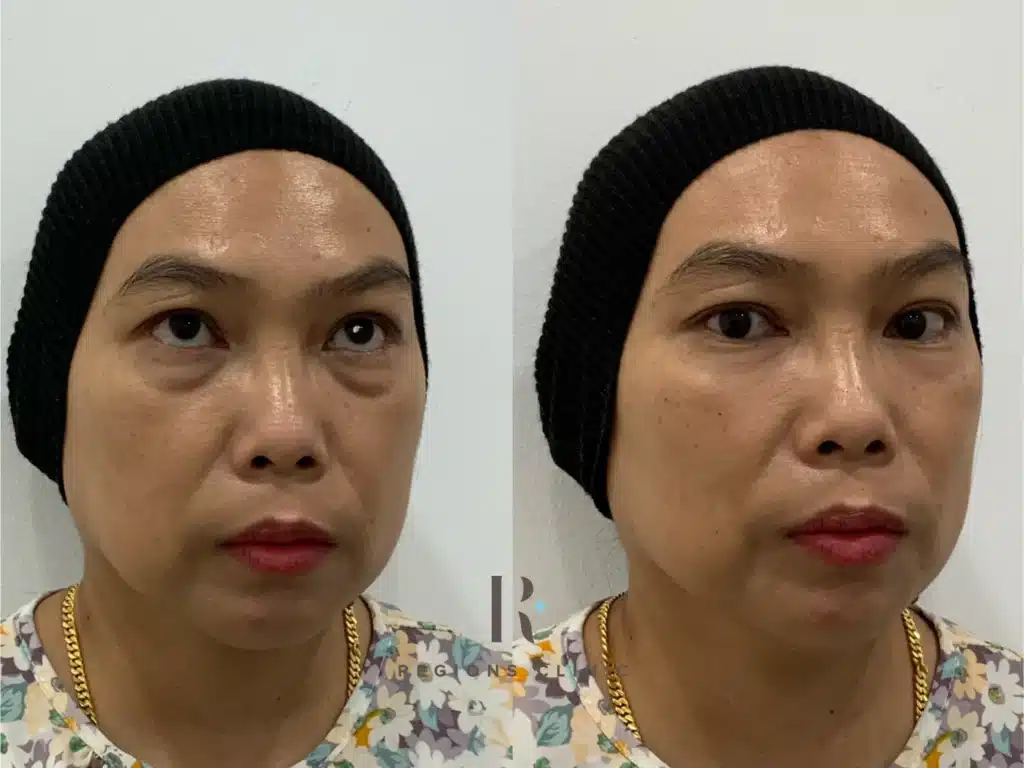
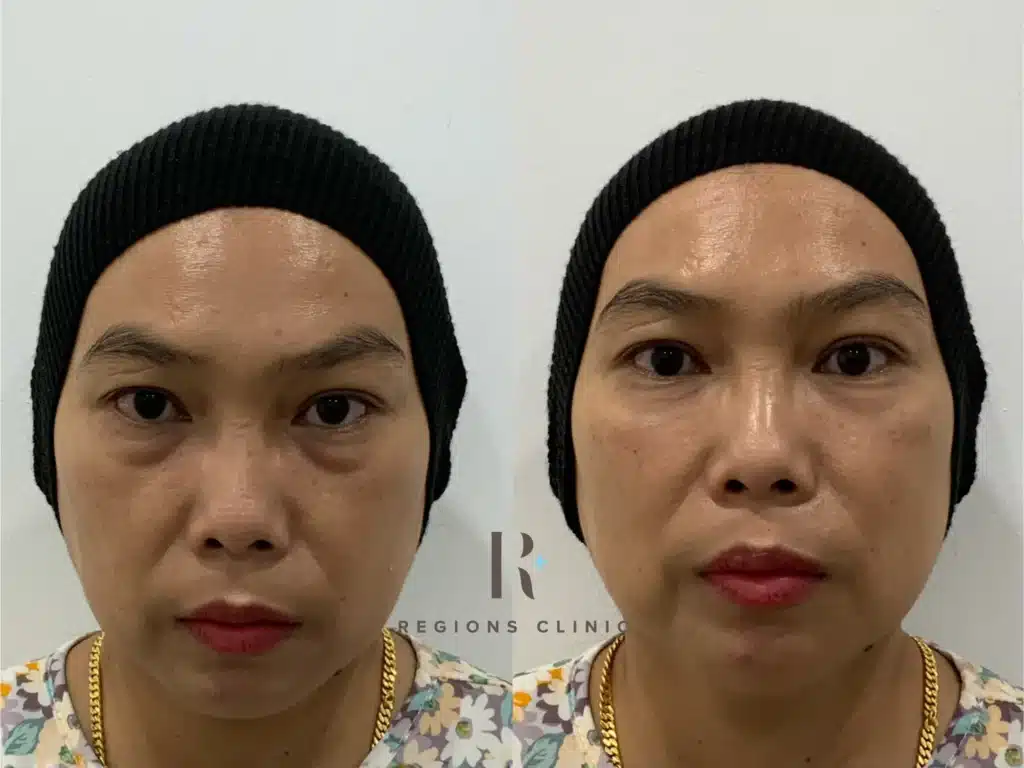
Ways to Get Rid of Eye Bags
There are different approaches to reducing under-eye puffiness, depending on the cause. At-home treatments can temporarily shrink lower lids that are sometimes swollen from fluid pooling in the undereye area.
But home remedies and over-the-counter products can only do so much, “To effectively get rid of under-eye bags that are prominent and permanent, medical treatment is oftentimes necessary.
At-home treatments for puffy eyes
If you occasionally wake up with puffy lids, these quick fixes may help. They work to reduce swelling until it naturally subsides over the course of the day.
- Cold compresses: Cooling the area lessens inflammation and swelling by reducing blood flow. You can place anything cold, such as an ice pack, frozen bag of vegetables, chilled cucumber slices or refrigerated spoons, over closed eyes for a few minutes.
- Hemorrhoid creams: Some people pat over-the-counter creams designed for hemorrhoid treatment under their eyes. Product ingredients such as phenylephrine narrow blood vessels to reduce swelling. But use these products with caution: They may cause irritation in this sensitive area. Also, it’s important to keep this medication from getting in your eyes.
- Caffeine: Caffeine is a vasoconstrictor, meaning it constricts blood vessels. Many cosmetics companies sell eye creams with caffeine to reduce under-eye puffiness. You can also try resting chilled tea bags (caffeinated black tea) on closed eyes.
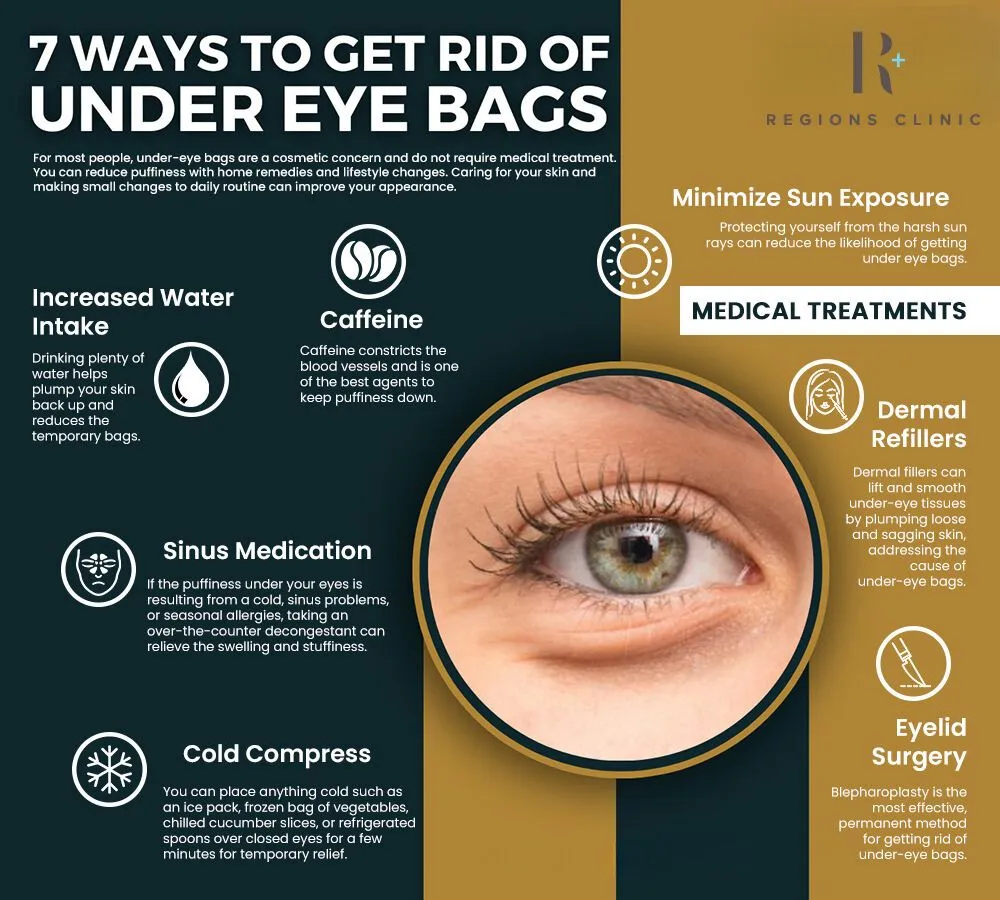
Medical options for under-eye bags
If you’re fed up with under-eye bags, these medical treatments can improve and even eliminate them:
Non-Surgical Eye Bag Removal
These noninvasive treatments smooth the under-eye area:
- Dermal Filler: This treatment places a filler material (usually hyaluronic acid, which is a jelly-like substance) where the under-eye area and cheek meet to create a smooth transition. The injection is performed in a doctor’s office under local anesthetic. Results last six to 12 months.
- Radiofrequency (RF): Thermage is a non-invasive skin tightening treatment. It uses radiofrequency energy to heat the deeper layers of the skin. This process stimulates collagen production, leading to tighter and smoother skin. In terms of eye bag removal, Radiofrequency can help tighten loose tissues and improve overall skin elasticity around the eyes. Results are gradual, with optimal results appearing 3-6 months after treatment. However, this treatment may not be suitable for everyone, and a consultation with a qualified doctor is necessary.
- Chemical peel: A chemical peel also treats wrinkly under-eye skin by removing superficial top layers. An in-office application of a chemical solution dissolves old skin cells to reveal tighter, brighter skin. Depending on your skin type and sun exposure, results can last a few years.
- HIFU: HIFU follows a similar principle as Radiofrequency but uses ultrasound energy instead of radiofrequency. It targets the deeper layers of the skin to stimulate collagen production, resulting in tighter and more lifted skin. Like Radiofrequency, HIFU can help tighten loose tissues under the eyes and improve overall skin quality. However, this treatment may be slightly uncomfortable, and results are gradual over several months. Again, consultation with a qualified doctor is necessary to determine if HIFU is suitable for you.
Eye Bag Removal Surgery
A lower eyelid lift (blepharoplasty) is an outpatient procedure where the doctor readjusts the fat in the lower eye area and tightens the muscle and skin to create a smooth appearance. In most cases, a lower eyelid lift gets rid of under-eye bags for life — it’s rare for people to need future touch-ups.
However, sometimes patients require multiple therapies to treat under-eye bags, such as combining laser resurfacing with filler or an eyelid lift.
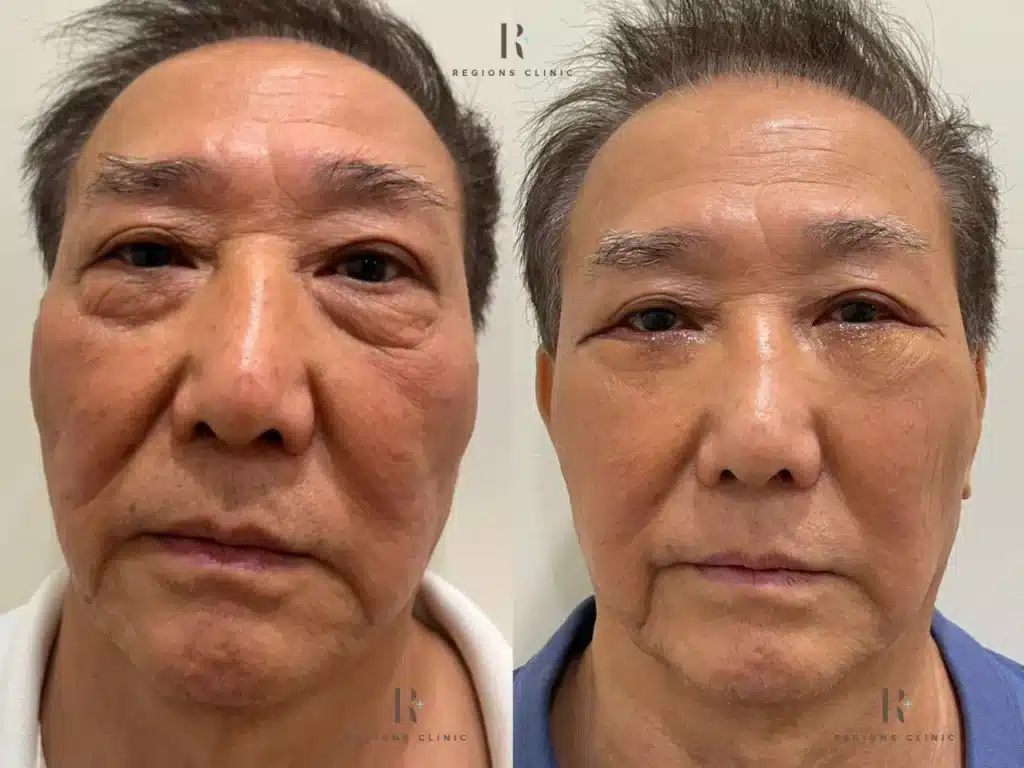
Why Home Remedies Don't Work: The Truth About Eye Creams
One of the most common questions we hear at Regions Clinic is: “I have bought the most expensive eye creams on the market, so why do I still have eye bags?”
The answer lies in anatomy, not the quality of the cream.
While high-quality eye creams are excellent for hydrating the skin and reducing fine lines, they have a physical limitation: they cannot penetrate deep enough to alter the structure of your face.
However, true chronic eye bags are caused by displaced fat pads and volume loss.
No Cream Can Move Fat: A topical cream cannot “shrink” a herniated fat pad that is sitting beneath the muscle.
No Cream Can Add Volume: A cream cannot fill the deep hollow of a tear trough to level out the shadow.
No Cucumber Can Tighten Muscle: Home remedies cannot tighten the lax muscles or lift the sagging tissue that holds the fat in place.
If your eye bags are visible 24/7, regardless of how much you sleep or what serum you apply, they are structural. Structural issues require a structural solution—which means a medical aesthetic treatment is the only effective path to removal.
What are Under-Eye Fillers?
Under-eye fillers, medically known as tear trough fillers, are one of the most effective non-surgical methods for treating the appearance of eye bags.
They are injectable gels made of Hyaluronic Acid (HA), a substance naturally found in your body that retains moisture and adds volume. Unlike permanent implants, HA fillers are soft, gel-like, and fully dissolvable, making them a safe and reversible option.
Premium, FDA-approved brands (such as Juvederm, Restylane, or Teosyal) specifically designed for the delicate under-eye area. These fillers are lighter and softer than those used for cheeks or chins, ensuring the result looks smooth and natural, not lumpy.
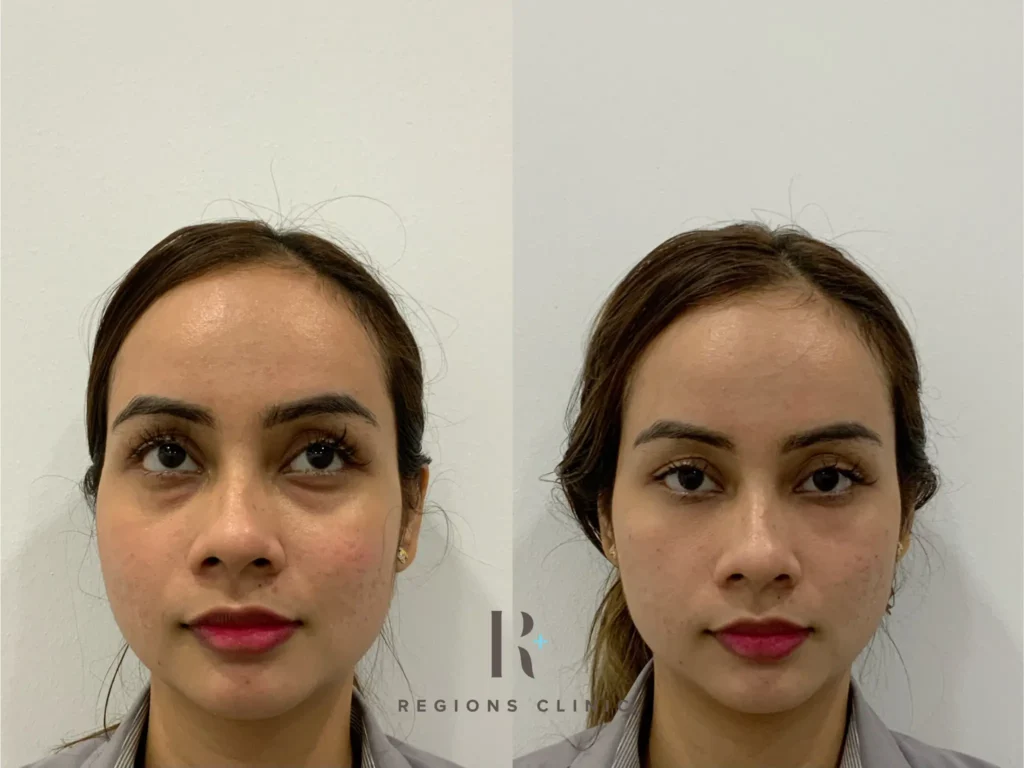
How Under-Eye Fillers Work to "Remove" Eye Bags
It is important to understand that fillers do not physically “remove” the fat pad. Instead, they work by camouflaging it.
Many eye bags appear prominent because of the deep hollow (tear trough) running right underneath them. This creates a “valley” next to the “mountain” (the eye bag).
The Technique: Our doctors carefully inject small amounts of filler into the “valley” (the hollow tear trough).
The Effect: This raises the hollow area until it is level with the eye bag.
The Result: By smoothing out the transition between the eye and the cheek, the shadow disappears. The eye bag is no longer visible, creating a seamless, refreshed, and rested look instantly.
This method is ideal for patients who have mild-to-moderate fat protrusion combined with volume loss.
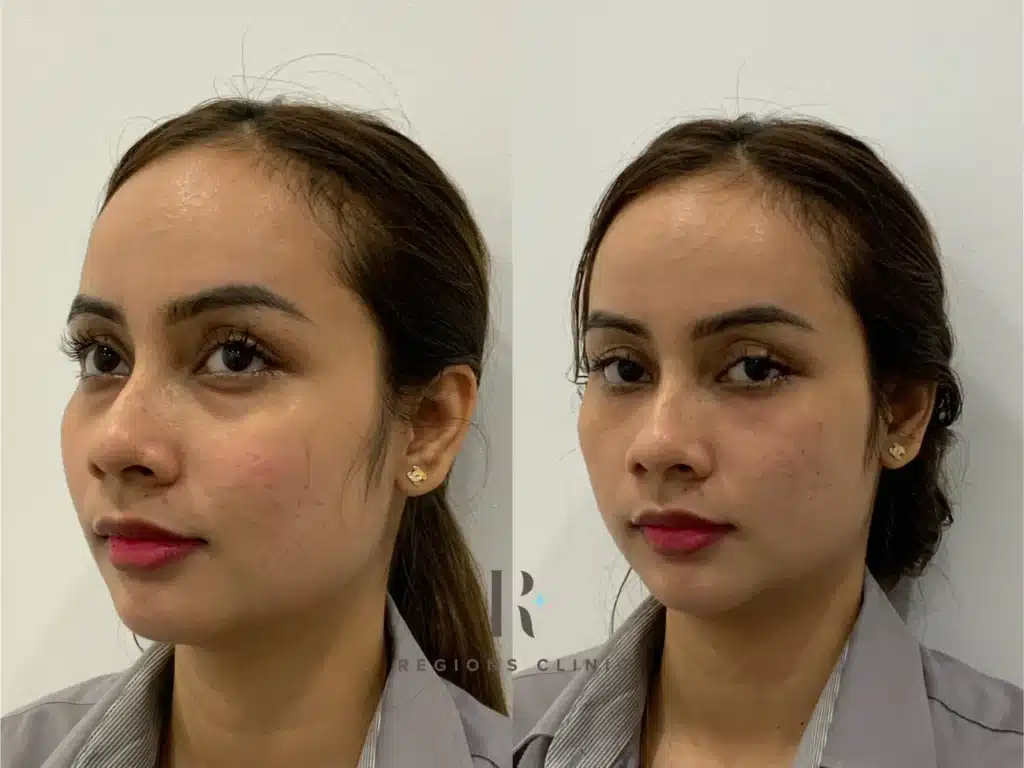
Beyond Tear Trough Fillers: Treating Fat & Loose Skin
While tear trough fillers are excellent for camouflaging hollows, they have a limitation: they cannot remove excess fat or tighten sagging skin. In fact, adding filler to a puffy fat pad can sometimes make the eyes look more swollen.
For patients with true “puffy” fat pads or skin laxity, we use advanced energy-based treatments to treat the root cause without adding volume.
RF Melting Fat Without Surgery
For patients with stubborn orbital fat pads, RF (Radiofrequency) is a breakthrough solution. Unlike surgery which cuts the fat out, RF uses a micro-insulated needle to deliver precision heat energy directly into the fat pad.
How it works: The heat permanently melts the fat cells, which your body then naturally eliminates.
The Benefit: It treats the physical bulge with zero incisions and minimal downtime.
HIFU Tightening the Support Structure
If your eye bags are caused by loose skin that can no longer hold the fat back, we use HIFU (High-Intensity Focused Ultrasound). This technology stimulates collagen production deep within the skin layers, effectively “shrink-wrapping” the under-eye area to create a firmer, smoother contour.
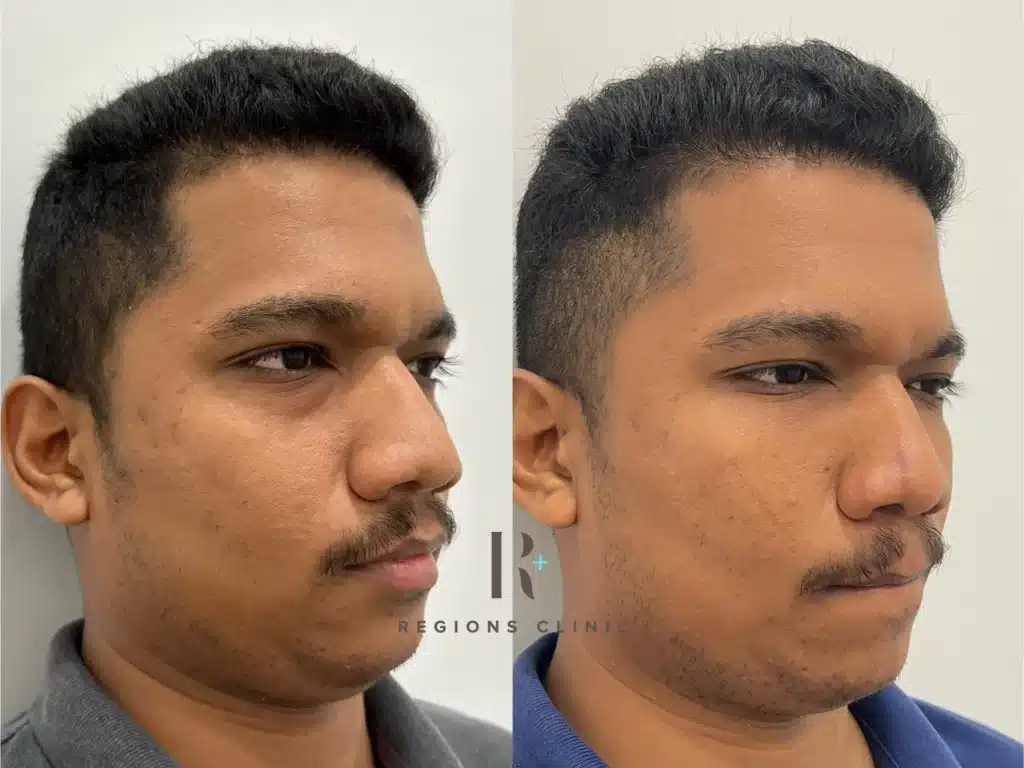
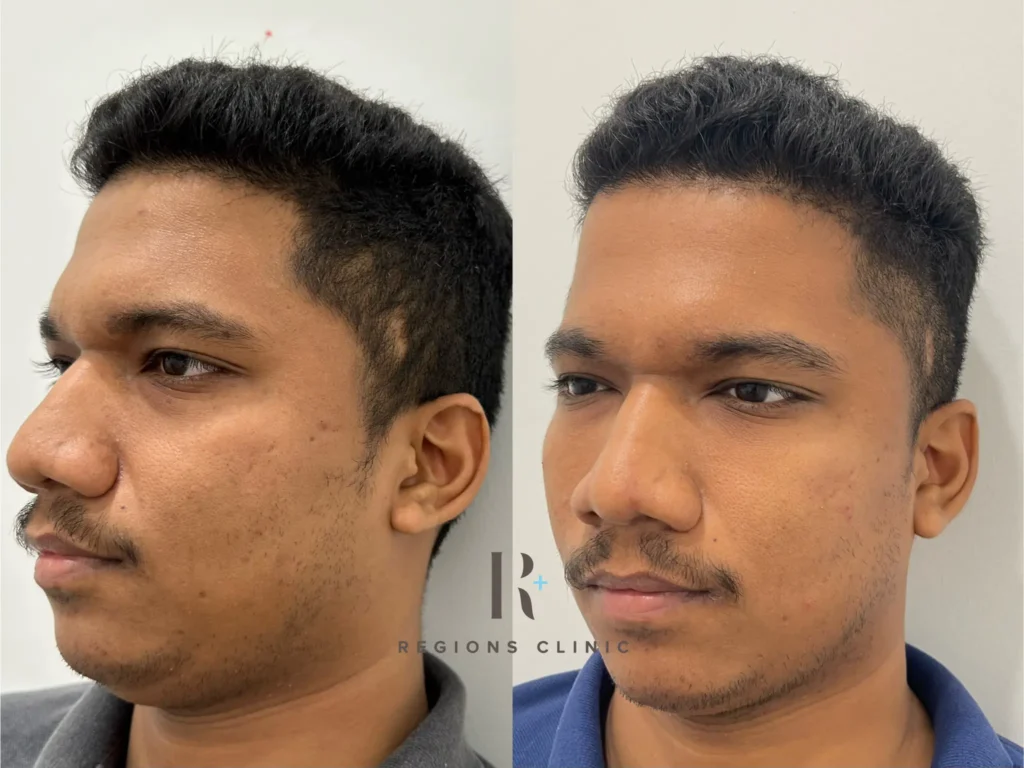
Eye Bags vs. Dark Circles: Do You Know the Difference?
It is vital to distinguish between these two common conditions, as they require completely different treatments.
Eye Bags (Structural): This is a texture issue. If you see a physical bulge or swelling that casts a shadow, it is an eye bag. This requires Fillers, Agnes RF, or Surgery.
Dark Circles (Pigmentation): This is a color issue. If the skin is flat but looks brown, purple, or blue, it is a dark circle caused by blood vessels or pigmentation. This requires Pico Laser or Skin Booster treatments, not eye bag removal tools.
Eye Bag Treatment Price in Malaysia
At Regions Clinic, we believe in transparent pricing. However, because eye bag treatment is not “one-size-fits-all,” the cost varies depending on the method required.
Tear Trough Fillers: typically priced per syringe.
Laser / RF / HIFU: typically priced per session.
During your consultation, we will assess whether you need a single treatment (like fillers) or a combination therapy (fillers + skin tightening) to achieve the best result.
Frequently Asked Questions (FAQ)
Is non-surgical eye bag removal permanent?
Treatments like HIFU / RF (which melts fat) offer permanent fat reduction, as the fat cells do not grow back. Fillers are temporary and typically last 1-2 years, requiring maintenance top-ups.
Is the treatment painful?
No. We apply a potent medical-grade numbing cream before all procedures. Most patients report feeling only mild pressure or a slight prickly sensation during the treatment.
What is the downtime compared to surgery?
Surgical blepharoplasty often requires 1-2 weeks of downtime due to stitches, swelling, and bruising. In contrast, our non-surgical options (Fillers, HIFU, RF) have minimal to no downtime, allowing you to return to work or daily activities almost immediately.
Can I treat eye bags and dark circles at the same time?
Yes. Many of our patients suffer from both. We can design a “Combination Therapy” plan that targets the eye bag (structure) and the dark circle (pigmentation) for a complete eye rejuvenation.
Book Your Free Consultation Today!
Regions Clinic | LCP Certified Aesthetic Clinic in Kuala Lumpur